
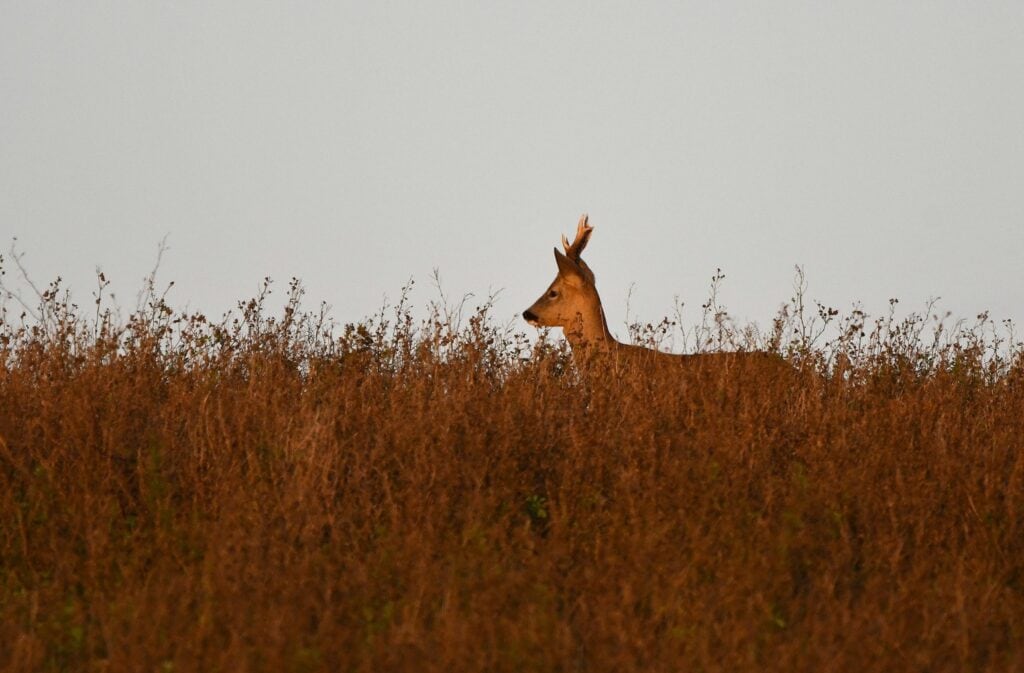
When people picture prime deer ground, they think big timber. In much of the Midwest, the best movement happens where timber meets agriculture.
Row crop farms shape deer behavior in ways that many buyers overlook. Corn and soybeans provide consistent food sources through much of the year. Even after harvest, waste grain keeps deer using fields well into late season.
The key is not the open field itself. It is the transition areas. Timber edges, ditches, waterways, and small pockets of cover become staging areas between bedding and food. A narrow strip of cover between two fields can hold surprising activity.
During early season, deer often feed deep in standing crops. As harvest begins, patterns change fast. Once fields are cut, remaining cover becomes more important. Properties with thick timber or CRP near row crops often see increased daylight movement.
Pay attention to how fields lay in relation to prevailing winds. Deer in agricultural areas rely on wind and visibility. Entry routes and stand placement matter more when you are hunting edges instead of large timber blocks.
Smaller tracts near row crop farms can hunt bigger than they look. If a property sits between bedding cover and consistent food, it can become a regular travel route.
In the Midwest, agriculture and whitetails go together. Understanding that relationship helps buyers see value others might miss.